ritheachengkh
🔒 Krypton Level 1 → Level 2
Level Info
The password for level 2 is in the file ‘krypton2’. It is ‘encrypted’ using a simple rotation. It is also in non-standard ciphertext format. When using alpha characters for cipher text it is normal to group the letters into 5 letter clusters, regardless of word boundaries. This helps obfuscate any patterns. This file has kept the plain text word boundaries and carried them to the cipher text. Enjoy!
🗝️ Solution
ssh krypton1@krypton.labs.overthewire.org -p 2231
KRYPTONISGREAT
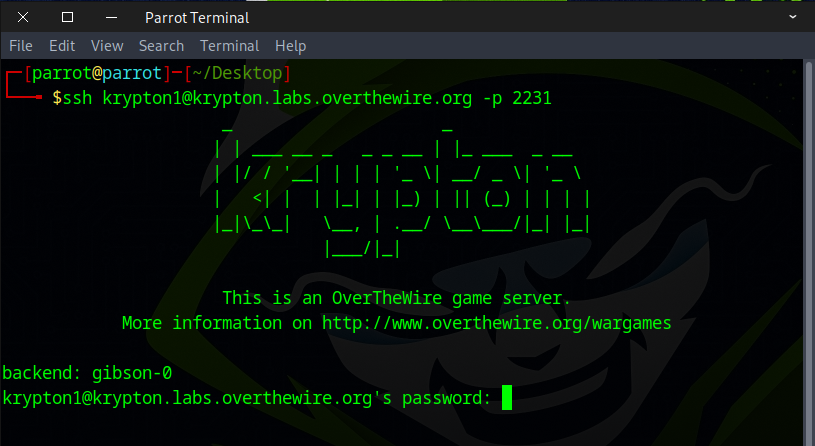
This screen will appear once you’ve logged in successfully.
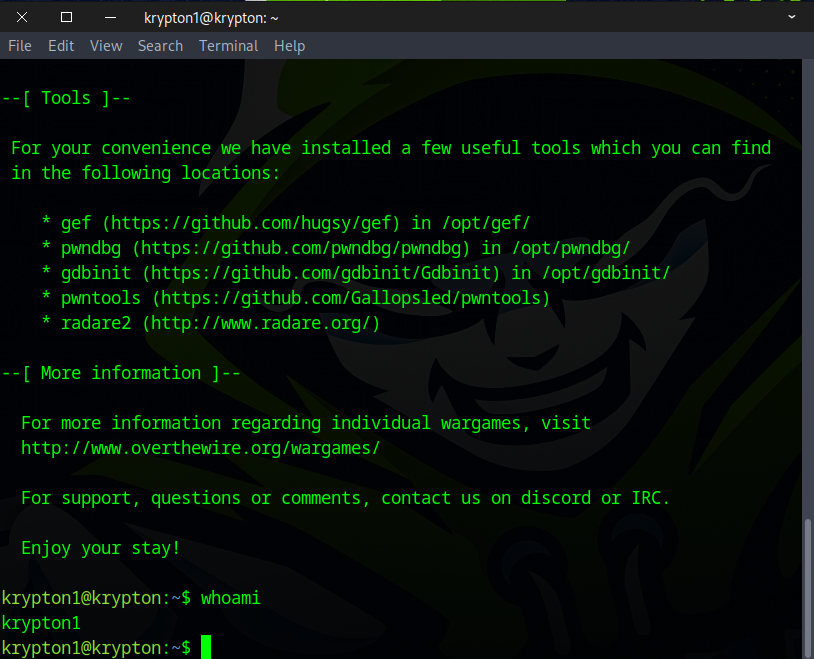
Next, navigate to the directory specified in the instructions.
cd /krypton/krypton1
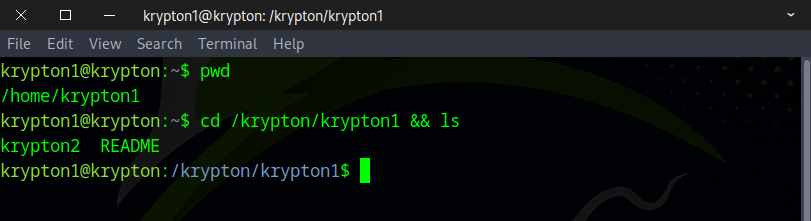
What is ROT13?
The Caesar cipher is one of the simplest and oldest encryption techniques. It’s named after Julius Caesar, who reportedly used it to send secret messages. ROT13 is part of the Caesar cipher family.
ROT13 stands for “rotate by 13 places”. It’s a very simple way to encode text so it’s not immediately readable. Here’s how it works:
- Take each letter of your message.
- Shift it 13 letters forward in the alphabet.
- If you go past “Z,” wrap around to the beginning of the alphabet.
Example
- Original:
HELLO - ROT13:
URYYB
| Original | ROT13 |
|---|---|
| H | U |
| E | R |
| L | Y |
| L | Y |
| O | B |
The cool thing about ROT13 is that encoding and decoding are the same operation. If you apply ROT13 again to URYYB, you get back HELLO.
ROT13 is often used just for hiding spoilers or puzzle answers online—not for real security.
Run the following command to decode the message:
echo "YRIRY GJB CNFFJBEQ EBGGRA" | tr 'A-Z' 'N-ZA-M'
or
cat krypton2 | tr "ABCDEFGHIJKLMNOPQRSTUVWXYZ" "NOPQRSTUVWXYZABCDEFGHIJKLM"
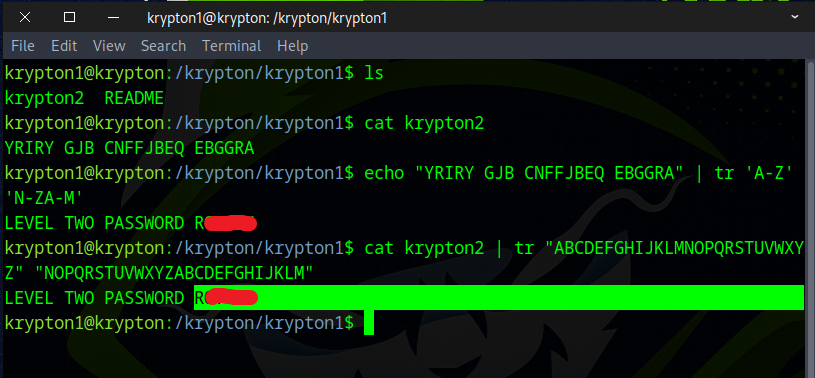
You can also use an online tool such as CyberChef.
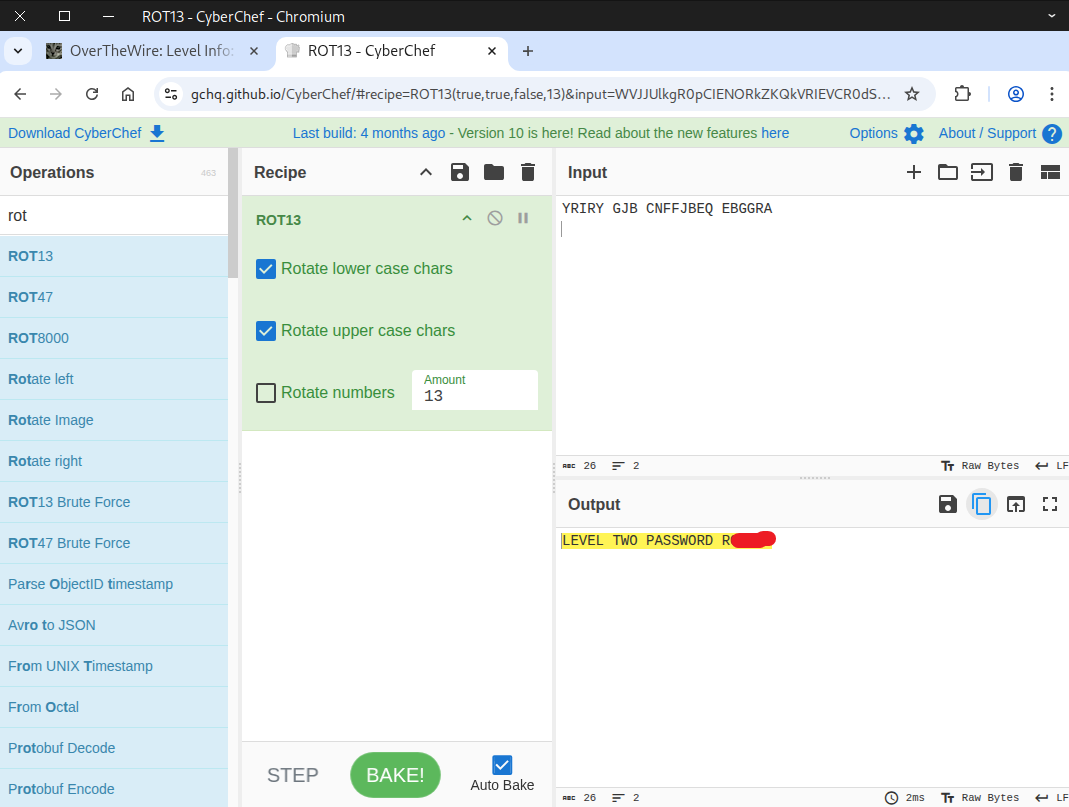
Well done! This flag will take you to the next round.