ritheachengkh

HTTP in Detail
Learn about how you request content from a web server using the HTTP protocol
Task 1 What is HTTP(S)?
What does HTTP stand for?
✅ HyperText Transfer Protocol
What does the S in HTTPS stand for?
✅ secure

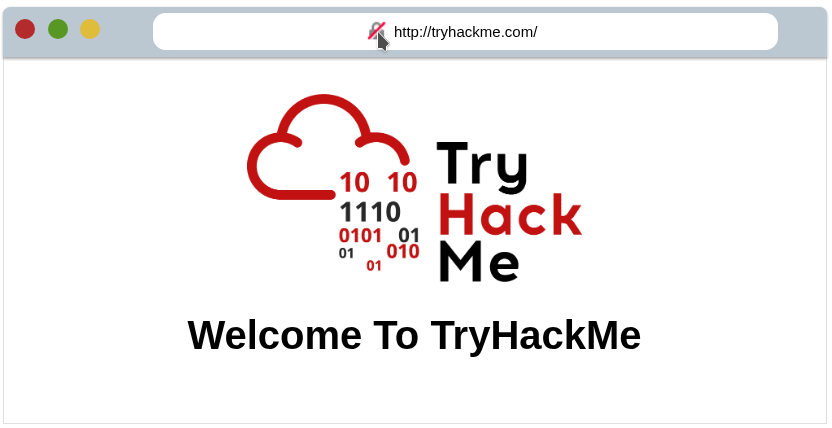
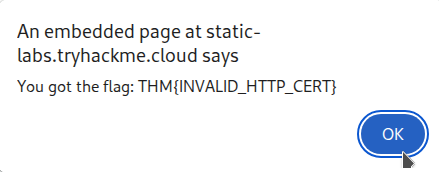
On the mock webpage on the right there is an issue, once you’ve found it, click on it. What is the challenge flag?
✅ THM{INVALID_HTTP_CERT}
Task 2 Requests And Responses
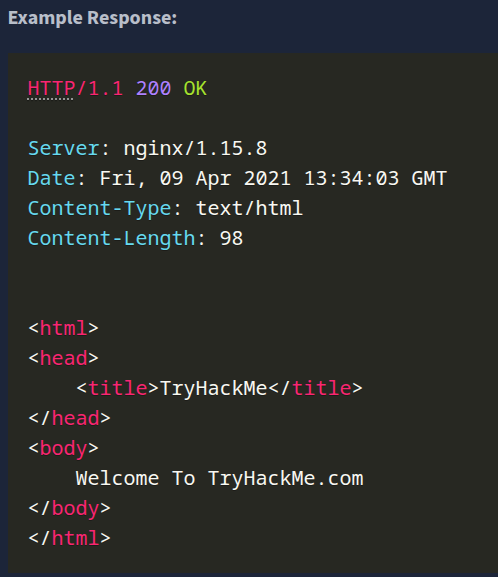
What HTTP protocol is being used in the above example?
✅ HTTP/1.1
What response header tells the browser how much data to expect?
✅ Content-Length
Task 3 HTTP Methods
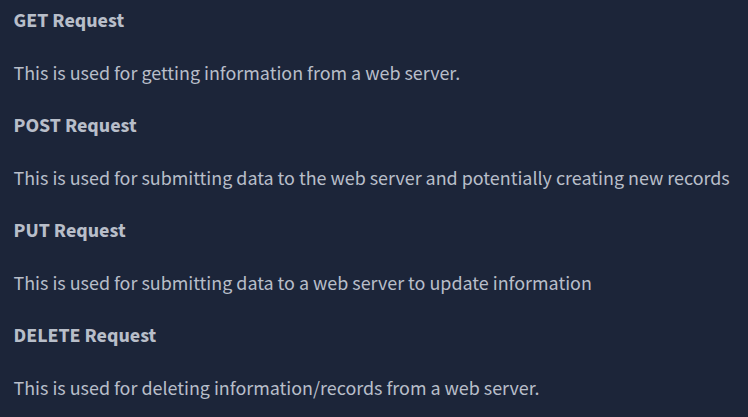
What method would be used to create a new user account?
✅ POST
What method would be used to update your email address?
✅ PUT
What method would be used to remove a picture you’ve uploaded to your account?
✅ DELETE
What method would be used to view a news article?
✅ GET
Task 4 HTTP Status Codes
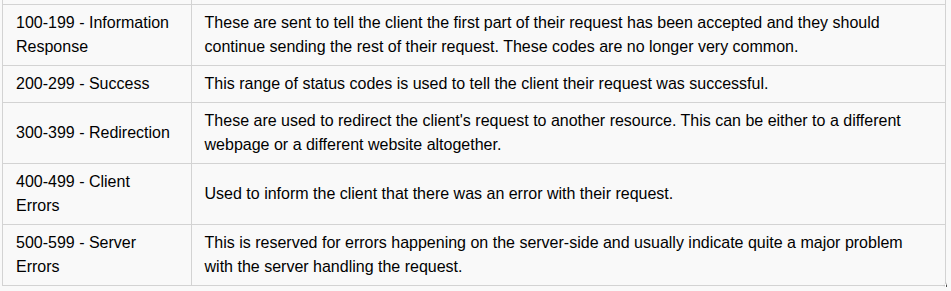
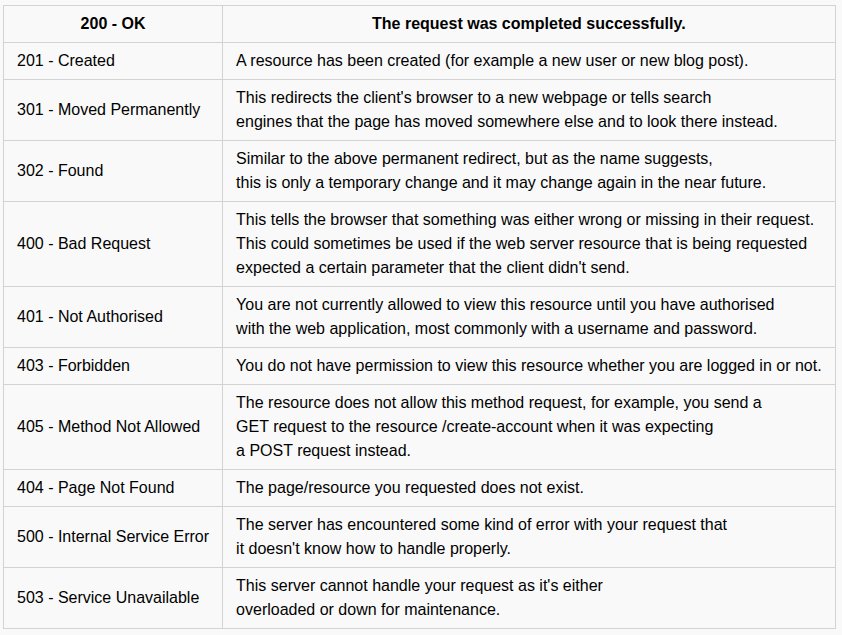
What response code might you receive if you’ve created a new user or blog post article?
✅ 201
What response code might you receive if you’ve tried to access a page that doesn’t exist?
✅ 404
What response code might you receive if the web server cannot access its database and the application crashes?
✅ 503
What response code might you receive if you try to edit your profile without logging in first?
✅ 401
Task 5 Headers
What header tells the web server what browser is being used?
✅ User-Agent

What header tells the browser what type of data is being returned?
✅ Content-Type

What header tells the web server which website is being requested?
✅ Host

Task 6 Cookies
Which header is used to save cookies to your computer?
✅ Set-Cookie

Task 7 Making Requests
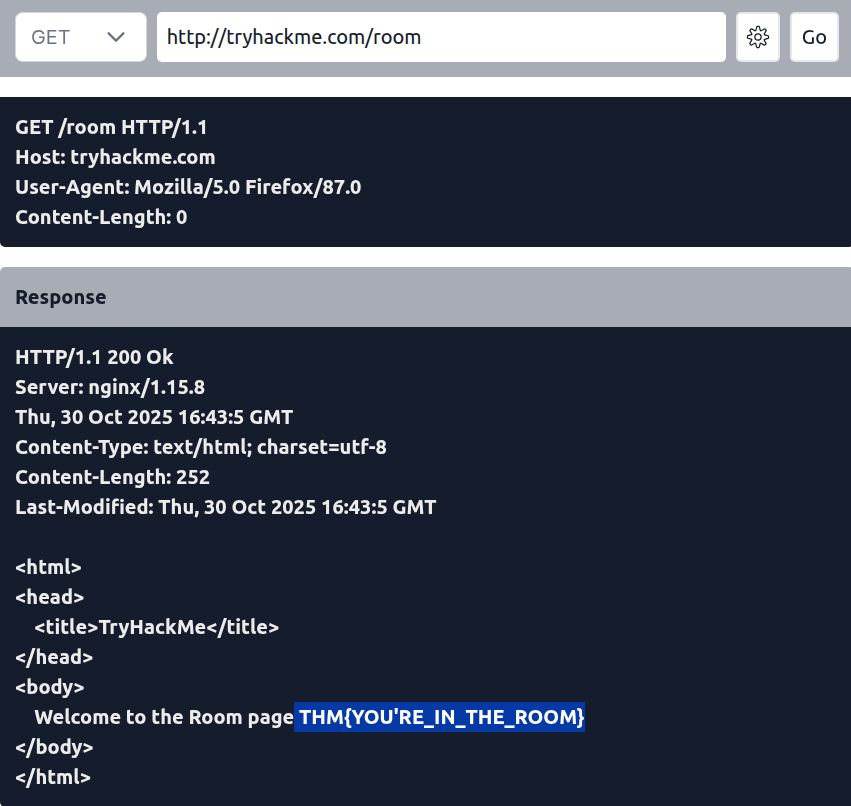
Make a GET request to /room page
✅ THM{YOU'RE_IN_THE_ROOM}
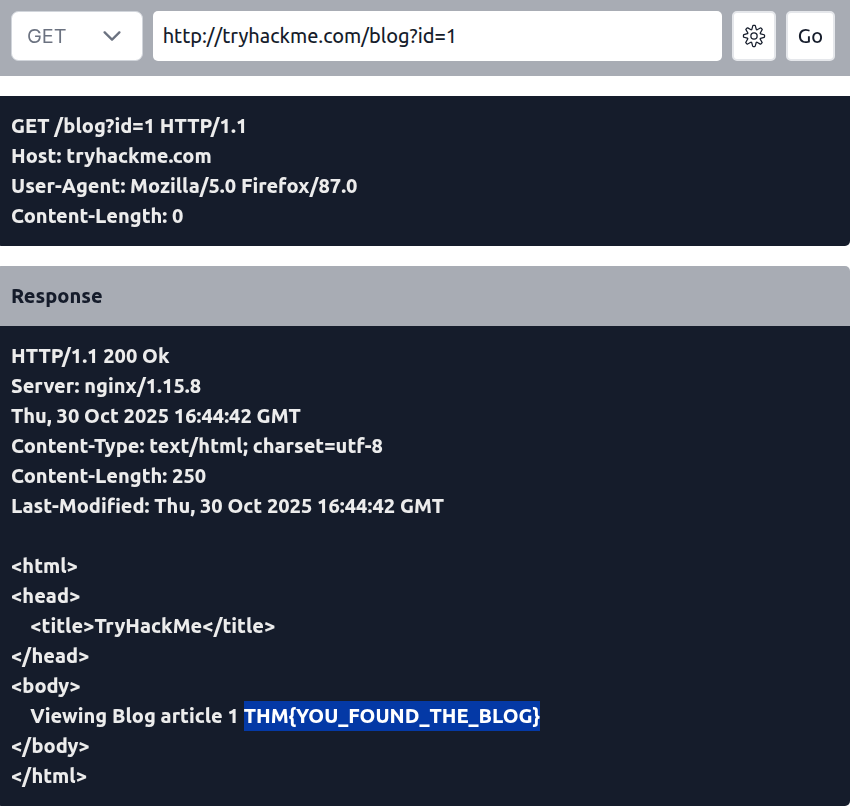
Make a GET request to /blog page and set the id parameter to 1 Note: Use the gear button on the right to manage URI parameters
✅ THM{YOU_FOUND_THE_BLOG}
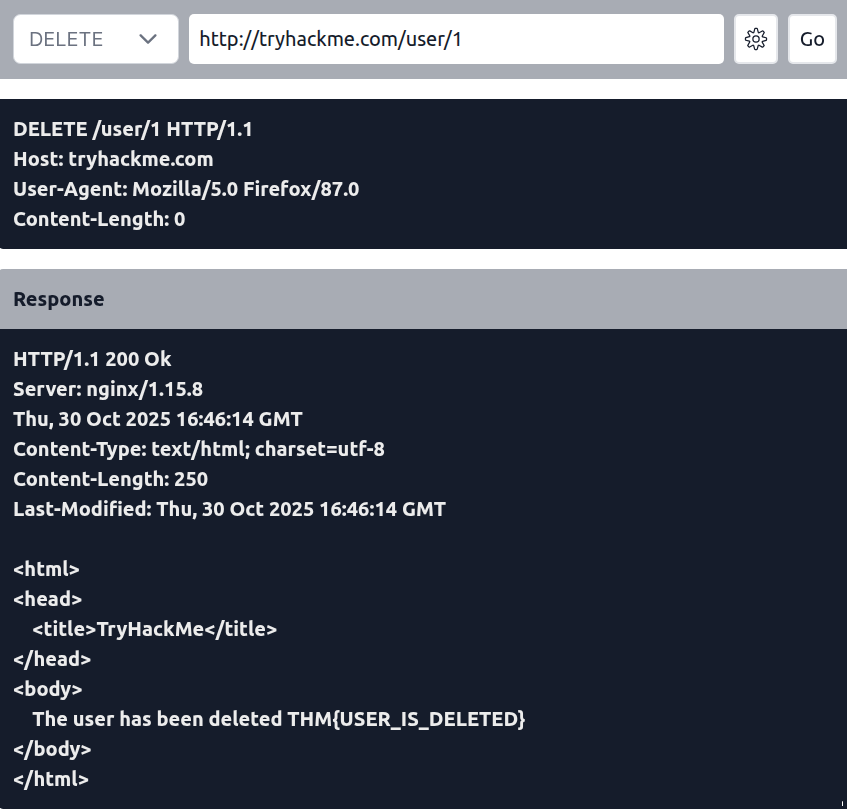
Make a DELETE request to /user/1 page
✅ THM{USER_IS_DELETED}
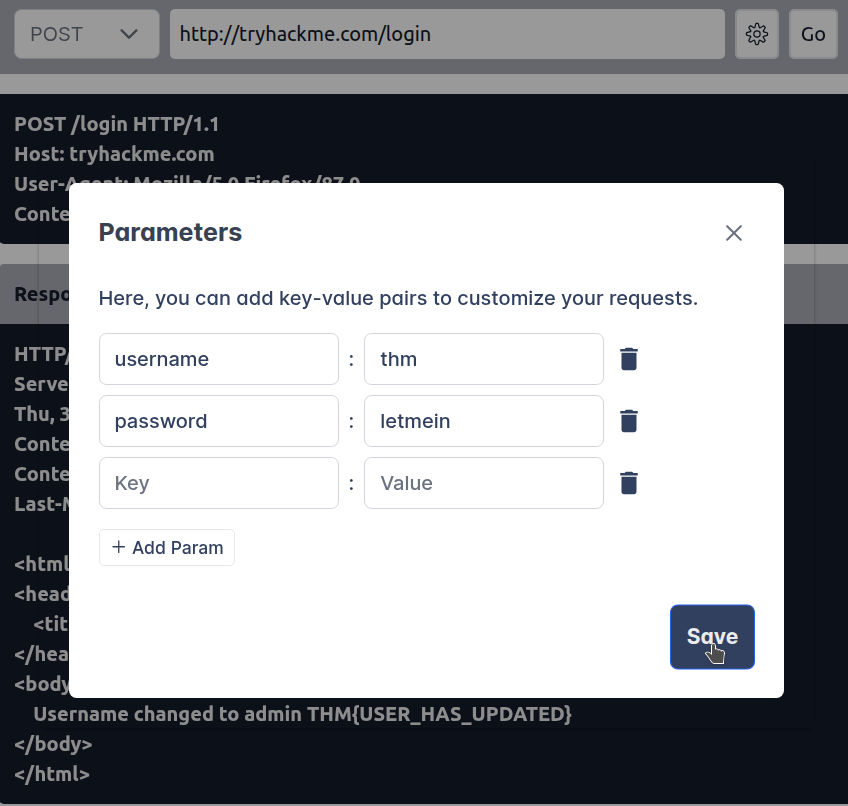
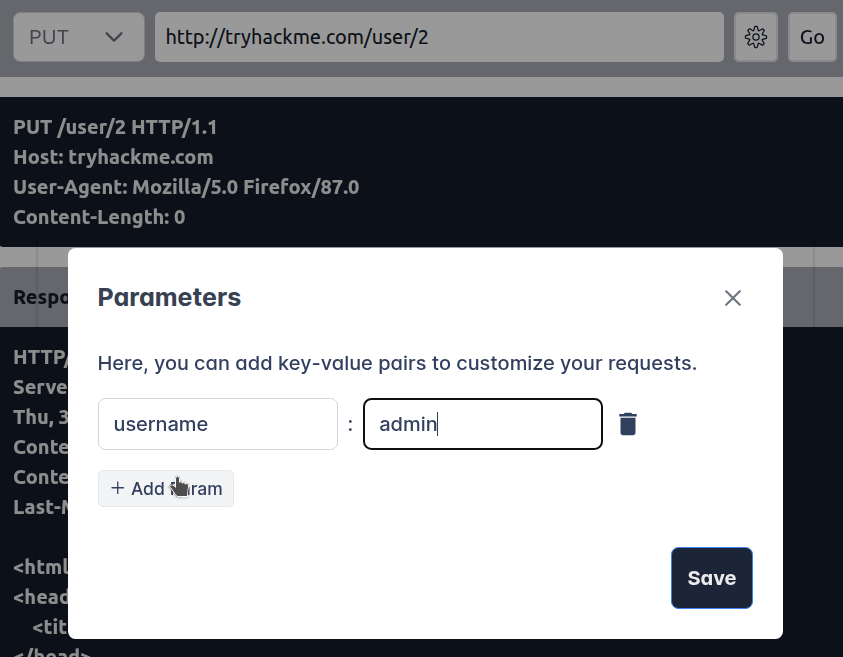
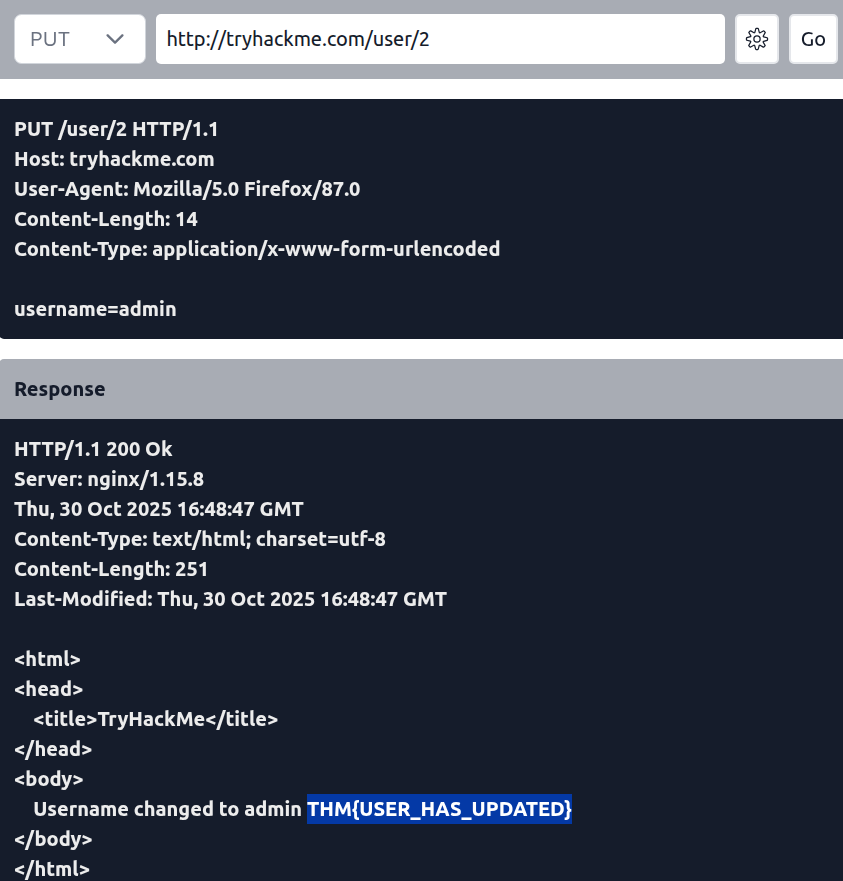
Make a PUT request to /user/2 page with the username parameter set to admin Note: Use the gear button on the right to manage body parameters
✅ THM{USER_HAS_UPDATED}
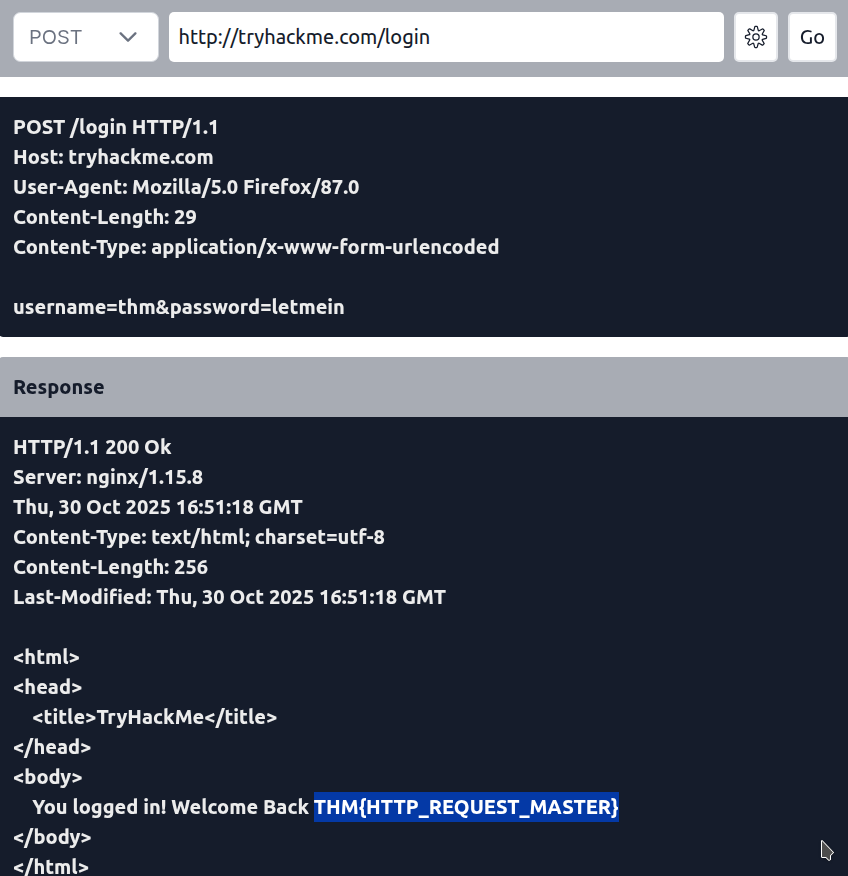
Make a POST request to /login page with the username of thm and a password of letmein Note: Use the gear button on the right to manage body parameters
✅ THM{HTTP_REQUEST_MASTER}